Best AI Contract Review Software in 2026
 23 min
In-house legal teams today know exactly what the problem is: contract volume keeps climbing and headcount does not. The question is which AI contract review platform actually moves work forward rather than just storing it. This guide compares eight leading platforms, starting with Chamelio, the Legal Intelligence platform that turns legal from a system of record into a system of action. Whether your team is sunsetting a legacy CLM, evaluating your first AI platform, or hitting a renewal decision, this comparison gives you the facts you need.
The workload pressure is measurable: CLOC’s 2025 research found that 83% of legal departments expected demand to increase. In the 2025 ACC Chief Legal Officers Survey, 35% identified operational efficiency as their top strategic initiative.
Why In-House Legal Teams Need AI Contract Review Software
The volume versus chairs problem is real. More contracts arrive each quarter while headcount stays flat, and the manual review cycle that once worked at fifty agreements a month quietly breaks at two hundred. AI contract review platforms step in at the first-pass stage, flagging risk, checking clauses against playbook positions, and generating redlines so lawyers spend their time on judgment rather than on line-by-line reads.
The Core Problems AI Contract Review Addresses
- First-pass bottleneck: Standard NDAs and MSAs consume senior attorney time that should go to higher-stakes work
- Inconsistent review standards: Different lawyers apply different positions without a shared, enforced playbook
- Knowledge walking out the door: When a lawyer leaves, their negotiation history and clause preferences go with them
- Disconnected context: Contract review happens in Word, but the context (prior deals, accepted positions, related agreements) lives somewhere else entirely
AI contract review platforms solve the bottleneck, but not all of them solve the context problem. A platform that only flags clauses in isolation is doing better than nothing. A platform that reviews each new agreement in light of everything your team has previously negotiated is doing the actual job.
What to Look for in AI Contract Review Software
Before comparing specific platforms, it helps to know what separates genuinely useful AI contract review from AI bolted onto a filing cabinet. The features below are the ones in-house legal teams consistently identify as the difference between a platform they adopt and one that collects dust.
Key Evaluation Criteria
- Playbook grounding in your own data: Generic market benchmarks help. Your own negotiation history helps more. The best platforms build review logic from your executed contracts, not just from a vendor-curated clause library.
- Word-native experience: Roughly 70% of contract work happens in Microsoft Word. A platform that forces lawyers out of Word and into a separate browser tab adds friction at the exact moment it should be reducing it.
- Breadth beyond review: AI contract review is a use case, not a complete legal operating layer. Does the platform connect review to intake, repository, workflows, and obligations, or does someone on your team still have to stitch those pieces together manually?
- Security posture: Customer data should not train external models. SOC 2 Type II certification is the baseline expectation for enterprise in-house teams.
- Implementation lift: Legacy CLM rollouts run six to twelve months. In 2026, that timeline is a product problem, not a category constraint.
- Contextual deal view: Can lawyers see related contracts, prior negotiated positions, and deal context inside the document environment without switching screens?
With those criteria established, Chamelio checks every box and then extends the frame. The platforms below are evaluated against this same standard.
How In-House Legal Teams Use AI Contract Review Platforms
Chamelio's customers describe the shift in concrete terms. Before, an NDA arrived by email, sat in a queue, consumed forty-five minutes of attorney time, and produced redlines that may or may not have been consistent with what the team agreed to last quarter. After, the platform handles the first pass, escalates only what needs a human decision, and records the outcome so the next NDA benefits from that context.
Here is how in-house teams actually use AI contract review platforms across the workflow:
Incoming contract triage:Chamelio Negotiate reads the counterparty's paper the moment it lands, runs it against your Playbooks, and surfaces deviations with suggested redlines inside Microsoft Word through Deal View, so the attorney opens a document that is already marked up rather than blank.
Playbook enforcement at scale:The AI Playbook Generator builds review standards directly from your historical contracts rather than from a generic template. That means the positions your team has fought for across hundreds of deals become the baseline for every future review.
Institutional knowledge retention:When a lawyer moves on, their negotiation history stays. Chamelio's Smart Repository auto-links connected documents and surfaces deal context, so the next person picking up a counterparty relationship starts from what was agreed, not from zero.
Obligation and renewal tracking:Post-signature, obligations surface before deadlines, not after. Auto-renewal dates do not go unnoticed because Agentic Workflows tracks them and triggers the right person at the right time.
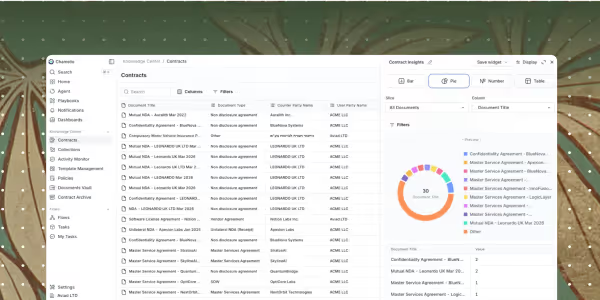
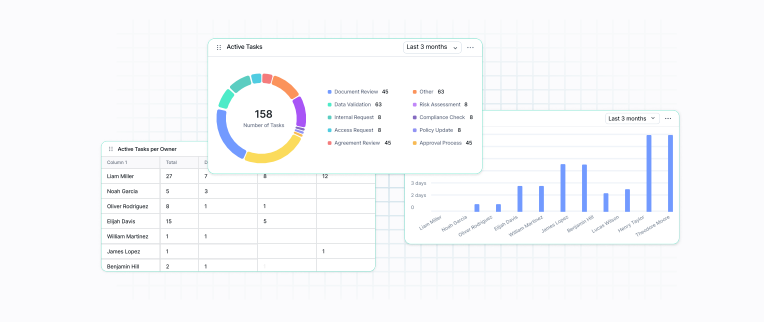
Workload visibility for GCs:Insights dashboards give General Counsel a clear picture of team capacity, review volume, and turnaround by contract type, so resourcing conversations with the business are grounded in data.
Migration off legacy systems:For teams on a legacy CLM contract coming up for renewal, the CLM Migrator moves contracts and data off the old system and into Chamelio without a multi-month migration project.
Chamelio is distinct from every other platform in this list because it connects all of these capabilities in one operating layer rather than requiring a separate intake solution, a separate redlining add-in, a separate repository, and a separate analytics dashboard.
Competitor Comparison: AI Contract Review Software in 2026
The table below provides a direct comparison of the platforms reviewed in this guide. It is designed to help in-house legal teams make a fast, fact-based shortlist decision before reading the full entries.
| Platform | Category | Review Environment | Playbook Source | Breadth Beyond Review | Pricing Signal | Best For |
|---|---|---|---|---|---|---|
| Chamelio | Legal Intelligence | Microsoft Word (Deal View) | Your own contract corpus | Full platform: intake, repository, workflows, AI Agent, insights | ~$30K ACV | In-house legal teams replacing a legacy CLM or separate solution stack |
| Ironclad | Legacy CLM | In-platform + Jurist AI | Configurable playbooks | Strong: workflow, repository, analytics | Custom enterprise quote | Enterprise teams with high-volume, structured contract workflows |
| Evisort (Workday) | Contract Intelligence / CLM | Web-based + Word | Extraction-based AI | CLM scope: repository, workflows, analytics | Custom enterprise quote | Large enterprises already in the Workday ecosystem |
| LinkSquares | CLM + Contract Analytics | Microsoft Word | AI-extracted + configurable | CLM scope: analytics-first, workflows, repository | Custom quote | In-house teams prioritizing contract portfolio analytics and reporting |
| Spellbook | AI Legal Review Platform | Microsoft Word (add-in) | Market benchmarks + custom | Review and drafting only | ~$99/seat/month (Standard) | Transactional lawyers wanting fast in-Word review and drafting |
| Ivo | AI Contract Review Platform | Microsoft Word (add-in) | Your executed contracts + playbooks | Review and repository queries | ~$6,000/user/year (reported) | Enterprise in-house teams with high-volume Word-based review |
| LegalOn | Contract Review Platform | Microsoft Word + web interface | Attorney-built + custom playbooks | Review, intake, matter management | From $550/seat/month (Individual) | In-house teams wanting attorney-built playbook standards out of the box |
| Luminance | Legal Intelligence / CLM | Microsoft Word + web platform | Your own contracts + positions | Full lifecycle: draft, negotiate, analyze, comply, investigate | Custom enterprise quote | Enterprise legal teams and organizations with high-volume due diligence |
Chamelio stands apart from the AI legal review platforms in this list because contract review is one capability within a connected platform, not the whole product. It stands apart from legacy CLMs because AI is the foundation of the system, not a feature added on top of a filing workflow.
Best AI Contract Review Software in 2026
1. Chamelio
Chamelio is the Legal Intelligence platform for in-house legal teams. Its positioning is straightforward: legal systems have spent twenty years building better systems of record. Chamelio builds a system of action. Contracts are not stored and retrieved; they are understood, compared, and acted on. Requests do not arrive as tickets; they arrive with context and move forward on their own. That shift is what makes Chamelio the top pick in this comparison.
Chamelio Negotiate handles AI-guided contract review and redlining directly inside Microsoft Word. Deal View gives lawyers a full contextual overview of the deal from within the document, without switching screens. Playbooks are built from the customer's own historical contracts by the AI Playbook Generator, so the review standard is grounded in what your team has actually negotiated rather than in generic market templates.
Noa Rosenberg Segalovitz, General Counsel at Lightricks, describes the outcome directly: "NDAs used to be a bottleneck. Now, Chamelio handles the first pass and only escalates what needs legal review, cutting turnaround time from 24 hours to under an hour."
Beyond review, the platform covers the entire legal operating layer. Smart Repository stores contracts with Auto Tagging of Metadata, Auto-linkage of Connected Documents, and Fine-Grained Permissions. Agentic Workflows orchestrates intake, approvals, and obligation tracking. The AI Agent reasons over your own contracts, playbooks, and negotiation history to answer questions and conduct Legal Research, with transparent reasoning and no connection to external training data. Insights surfaces team workload and efficiency data. The CLM Migrator moves teams off legacy systems without a six-month implementation project.
Aviad Levin, General Counsel and Corporate Secretary at Socure, puts it plainly: "Chamelio has transformed how we handle legal work. What stands out most is the AI's ability to understand legal context and nuance not just keywords."
Key Features:
- Chamelio Negotiate: AI-guided contract review and redlining inside Microsoft Word with Deal View for full contextual deal visibility
- AI Playbook Generator: Builds playbooks from your own historical contracts, not from generic templates
- Smart Repository: Contract storage with Auto Tagging of Metadata, Auto-linkage of Connected Documents, and secure storage for sensitive non-contract files
- Agentic Workflows: End-to-end orchestration of legal processes including AI Processes, Tasks and Matters, and Intake
- AI Agent: Autonomous legal work grounded in your own data, with transparent reasoning and Legal Research capability
- CLM Migrator: Migration tooling to move contracts and data off a legacy contract system
AI Contract Review Offerings:
- Incoming third-party paper: reviewed against your Playbooks with AI-generated redlines inside Word
- Contextual deal view: Deal View connects the document being reviewed to related agreements and prior negotiated positions
- Unlimited analysis: review is not constrained to manually pre-defined playbook fields
- Obligation tracking: Agentic Workflows surfaces key dates and renewal triggers before they become problems
Pricing: Approximately $30K ACV. Contact Chamelio for a custom quote based on team size and scope.
Pros:
- AI built in from the start, grounded in your own contracts, playbooks, and negotiation history
- Word-native review with Deal View for full contextual visibility inside the document
- Breadth across review, intake, repository, workflows, and insights in one connected platform
- Fast time-to-value compared to legacy CLM rollouts that run six to twelve months
- SOC 2 Type II certified; customer data is not used to train external models
- CLM Migrator for teams on a legacy contract coming up for renewal
- Integrations with Slack, Microsoft Teams, Salesforce, HubSpot, Box, Google Drive, SharePoint, Monday.com, Zip, and e-signature platforms
Cons:
- Pricing requires a sales conversation; no self-serve signup
- Teams migrating from a deeply configured legacy CLM will need to invest time in playbook setup
For in-house teams tired of managing contracts across five disconnected platforms, Chamelio is the operating layer that connects everything. Visit chamelio.ai to learn more.
2. Ironclad
Ironclad is a mature Contract Lifecycle Management platform with strong enterprise adoption. Its Workflow Designer lets legal ops teams build contract approval processes without writing code, and the Jurist AI feature handles drafting, review, negotiation, and research. Ironclad's integration ecosystem is broad, and its repository search is capable. For organizations with structured, high-volume contract workflows, it remains a credible enterprise CLM.
Ironclad's AI is a layer added to a system of record architecture, and that framing shapes what it can and cannot do. Setup typically runs eight to sixteen weeks with a paid implementation engagement. Teams seeking fast time-to-value or a migration path off Ironclad will find Chamelio's CLM Migrator directly relevant.
Key Features:
- Jurist AI for contract drafting, review, negotiation, and research
- Visual Workflow Designer for no-code approval process configuration
- Centralized contract repository with natural language search
- Native e-signature and broad integration ecosystem including Salesforce and Slack
AI Contract Review Offerings:
- Clause-level redlining and deviation detection against configurable playbooks
- Risk flagging and obligation extraction
- AI-assisted first-pass review for common contract types
Pricing: Custom enterprise pricing; no public rate card. Implementation typically includes a paid Customer Success engagement.
Pros:
- Established enterprise CLM with high brand recognition and a large customer base
- Visual workflow builder that non-technical legal ops can manage without IT support
- Broad integration ecosystem with 40-plus native connectors
- Mature post-signature analytics for renewal management and reporting
Cons:
- Implementation timelines of eight to sixteen weeks create meaningful lag before the platform delivers value
- AI capabilities are layered on top of a document-storage architecture rather than built from the ground up
- Workflow Designer requires legal ops engineering hours to configure for complex processes
3. Evisort (Workday)
Evisort is an AI-native contract intelligence platform, now part of Workday. Its machine learning models were trained to extract clauses, terms, obligations, and metadata from contracts, turning static legal text into structured data. The Ask AI natural-language interface allows users to query the contract repository in plain language. For organizations already in the Workday ecosystem, the integration story is straightforward.
Evisort's strength is extraction and analysis at scale. Its workflow tools cover most operational needs, and implementation for large-scale deployments carries meaningful overhead. Teams specifically evaluating Evisort alongside Chamelio will find that Chamelio differentiates on breadth of action and on AI grounded in the customer's own corpus rather than a vendor-trained model.
Key Features:
- AI-powered contract data extraction across a large contract corpus
- Ask AI natural-language interface for contract repository queries
- Obligation tracking with automated notification and dashboard reporting
- Workday integration for organizations running HR and finance on that platform
AI Contract Review Offerings:
- Automated metadata extraction and clause classification
- Risk and obligation visibility across the contract portfolio
- Generative AI for contract creation and summarization
Pricing: Custom enterprise pricing; annual subscription, quote-based. No public pricing page.
Pros:
- Strong AI-native extraction accuracy for clause identification and obligation tracking
- Natural-language search across the full contract repository
- Seamless fit for organizations standardized on the Workday ecosystem
- Configurable extraction with no-code workflow tooling
Cons:
- Implementation overhead is meaningful for medium-to-large deployments
- Scanned and legacy document OCR accuracy can lag on low-quality files
- Pricing and total cost of ownership require careful negotiation; no published rate card
- Teams with highly bespoke negotiation playbooks sometimes need to supplement with additional solutions
4. LinkSquares
LinkSquares is a CLM and contract analytics platform built for in-house GC offices. Its Analyze module extracts and categorizes clauses from executed contracts, and its Finalize module manages pre-signature workflows including drafting, approvals, and redlining in Word. The Smart Values feature allows legal ops teams to define custom extraction points beyond pre-set metadata fields. LinkSquares has held a strong G2 category leader position across multiple quarters.
LinkSquares leads with analytics. For GC offices that need board-ready exposure reports, renewal calendars, and portfolio-level reporting, it is a capable choice. The platform's primary design philosophy is analytics and reporting first, which means the AI contract review capability sits within a CLM frame rather than within a broader legal action layer.
Key Features:
- Analyze module for AI-powered clause extraction and portfolio reporting
- Finalize module for pre-signature workflows, approvals, and Word-based redlining
- Smart Values for user-defined custom extraction fields
- Integrations with Salesforce, HubSpot, Slack, and DocuSign
AI Contract Review Offerings:
- AI clause detection across 120-plus dates and clauses
- Playbook-backed review inside Microsoft Word
- Portfolio-level reporting on risk patterns, obligations, and renewal deadlines
Pricing: Subscription-based, quoted based on organization size and modules selected.
Pros:
- Analytics-first design delivers strong board-ready reporting for GC offices
- Smart Values allows flexible, user-defined extraction without vendor customization
- Consistent G2 recognition and a customer base of 1,200-plus organizations
- Strong Salesforce integration for sales-driven contract workflows
Cons:
- Workflow engine depth is thinner than leading enterprise CLM alternatives
- Smart Values reliability can vary on non-standard extraction tasks, per public user reviews
- Does not provide primary legal research capability
- Small-team economics can be challenging given the enterprise pricing tier
5. Spellbook
Spellbook is an AI contract drafting and review platform built natively inside Microsoft Word. It uses large language models to help transactional lawyers draft clauses, flag risks, suggest redlines, and benchmark contract language against a library of more than 2,300 contract types. The Compare to Market feature, launched in 2026, benchmarks specific deal terms against thousands of similar agreements by industry and jurisdiction. Spellbook Associate handles multi-document work across a full diligence set.
Spellbook's strength is the in-Word experience. For lawyers who live in Word and want AI review without leaving that environment, it is a polished and focused platform. Its scope is narrower by design: it understands a contract and does it well, but it does not manage the matter, track obligations, or connect to the wider workflow behind the document.
Key Features:
- In-Word AI drafting, review, and redlining via a sidebar pane
- Clause benchmarking against 2,300-plus contract types and market standards
- Custom playbooks for enforcing team-specific clause positions
- Spellbook Associate for multi-document and data-room work
AI Contract Review Offerings:
- Real-time clause risk flagging and redline suggestions inside Word
- Market benchmarking for specific deal terms by industry, jurisdiction, and deal type
- Automatic detection of missing clauses and unusual provisions
Pricing: Standard plan at approximately $99/seat/month. Enterprise pricing is quote-based and sales-led.
Pros:
- Polished, Word-native experience with minimal friction for lawyers already working in that environment
- Market benchmarking provides data-backed context for negotiation positions
- Transparent base pricing for individual users
- Focused scope makes it fast to adopt for teams with a single review use case
Cons:
- Operates at the document level; does not track client relationships, obligations, deadlines, or matter context
- No contract repository, intake management, or post-signature obligation tracking
- No reminders or alerts functionality
- Review and drafting capability does not connect to broader legal workflow
6. Ivo
Ivo is an AI contract review platform designed for enterprise in-house legal teams. It operates inside Microsoft Word and Google Docs, reviewing contracts against playbooks built from your executed contracts and deal context such as contract value and urgency. Its AI achieved 97% accuracy on the Contract Understanding Atticus Dataset, and it benchmarks clauses against your own executed contracts by governing law, contract type, party role, and industry. Ivo is used by large enterprise legal teams with high volumes of commercial contracts.
Ivo is strong at what it was built for: consistent, playbook-driven redlining inside the document environment. The platform is focused on contract review and repository queries. Teams looking for broader legal process coverage, including intake, obligation tracking, and AI that acts across the full legal function, will find that coverage outside Ivo's scope.
Key Features:
- Word-native AI review and redlining against playbooks grounded in executed contracts
- Clause benchmarking against your own contract portfolio by governing law and contract type
- Contract relationship detection for amendments and superseding agreements
- Legal Research with verified sources including public regulatory databases
AI Contract Review Offerings:
- Playbook-driven issue flagging with pass/fail categorization and explanations
- Automated redline suggestions based on playbook logic and deal context
- Repository-wide queries and contract intelligence
Pricing: Reported at approximately $6,000/user/year, all-inclusive, billed annually. Pricing is not publicly listed; a demo is required.
Pros:
- High accuracy on contract clause identification backed by verifiable benchmark data
- Playbooks grounded in your own executed contracts, not generic standards alone
- Audit trail tracking for edits, redlines, and approvals
- SOC 2 Type II and ISO 27001 certified
Cons:
- Scope is limited to contract review and repository queries; broader legal workflow is outside the platform
- Enterprise pricing may present a barrier for smaller in-house teams
- Onboarding requires meaningful setup time before the platform delivers full value, per public reviews
- No self-serve access; a sales demo is required to evaluate the product
7. LegalOn
LegalOn is a contract review platform centered on attorney-built playbooks and structured, clause-level AI analysis. Its AI contract review feature instantly reviews first- and third-party contracts, flags risks by severity, and generates redline suggestions. The platform operates through a Microsoft Word add-in and a supporting web interface, and it covers pre-signature review, matter intake, and basic template management. Pre-built playbooks covering common agreement types mean teams get value without long setup.
LegalOn is designed for in-house teams where contract review itself is the primary buying reason. Its attorney-authored content gives it a credible out-of-the-box playbook standard. Teams that need the complete legal operating layer, including connected workflows, a smart repository, and AI that acts across the full function, will find LegalOn's scope narrower than that.
Key Features:
- Attorney-built playbooks covering 50-plus common agreement types, available immediately
- AI contract review with risk scoring and severity prioritization inside Microsoft Word
- Matter intake and management through a web interface
- Multi-language contract review capability
AI Contract Review Offerings:
- Clause-level analysis against attorney-authored and custom playbook positions
- AI-generated redline suggestions grounded in legal standards
- Repository-wide AI search and analysis for contract intelligence
Pricing: Individual plan from $550/seat/month (billed annually). Team pricing is custom and sales-led. Add-on modules including Matter Management and Multi-Jurisdiction Playbook Pack increase the all-in cost.
Pros:
- Attorney-built playbooks provide immediate, credible review standards without long configuration
- Consistent AI review performance across high-volume contract work
- Clear individual pricing tier with a published rate for solo attorneys and fractional GCs
- SOC 2 Type II certified
Cons:
- Available contract type selections do not always match highly specific or unusual agreement types, per public reviews
- Full-featured team pricing is modular; the all-in cost runs meaningfully higher than the base individual license
- Scope is review-first; broader legal workflow orchestration requires additional platforms
- No developer-facing API publicly documented for custom integrations
8. Luminance
Luminance is an enterprise AI platform for the full contract lifecycle, marketed around its Legal-Grade AI architecture. Its Autopilot feature can negotiate standard NDAs end-to-end with minimal human input, moving through redlines and counterparty responses autonomously. The platform covers drafting, review, negotiation, analysis, compliance monitoring, and investigation. In January 2026 it added institutional memory, connecting accepted negotiation positions and history across the contract portfolio, and in June 2026 it introduced Luna Crescent, a model family trained specifically for contract work.
Luminance is built for high-volume enterprise environments. It processes documents in over 80 languages and has analyzed more than 150 million documents, giving its AI a substantial training corpus. For in-house teams with large-scale due diligence requirements or complex multi-jurisdiction portfolios, it is a capable platform. The implementation timeline and enterprise pricing profile make it less suited to lean in-house teams or teams needing fast time-to-value.
Key Features:
- Legal-Grade AI with a Panel of Judges approach for clause identification and risk flagging
- Autopilot for autonomous NDA negotiation with minimal human involvement
- Contract intelligence across a searchable repository with traffic-light clause analysis in Word
- Luna Crescent, a model family trained specifically for contract work
AI Contract Review Offerings:
- Auto-Review for flagging non-standard clauses and missing provisions across document sets
- Negotiation AI that reuses past positions to suggest fallback wording
- Portfolio-level contract intelligence with compliance monitoring and obligation tracking
Pricing: Custom enterprise pricing. No public rate card. Evaluation requires a sales engagement.
Pros:
- Strong performance on high-volume due diligence and large document sets
- Autopilot for autonomous negotiation of routine agreements is a genuinely differentiated feature
- Multi-language support across 80-plus languages for global organizations
- Institutional memory connects accepted positions and negotiation history across the portfolio
Cons:
- Enterprise pricing and weeks-to-months deployment make it a difficult first buy for lean in-house teams
- Primarily positioned for law firms and large enterprise; smaller in-house teams may find the setup investment difficult to justify
- Custom quote-only pricing makes budget planning opaque without a sales conversation
- On-premise deployment option adds infrastructure overhead for teams that want cloud-only simplicity
Evaluation Rubric for AI Contract Review Software
When evaluating platforms in this category, in-house legal teams should weight criteria based on their actual buying scenario. The framework below reflects what GCs, Heads of Legal Ops, and Deputy GCs consistently identify as the decision-driving factors.
| Evaluation Criterion | Why It Matters | Weight |
|---|---|---|
| AI grounded in your own contracts | Generic models miss your specific positions and history; your own corpus is the context that makes review accurate | High |
| Word-native review experience | Switching lawyers out of Word adds friction and slows adoption; the best platforms meet lawyers where they work | High |
| Breadth beyond review | Separate solutions leave the team stitching the workflow together; a connected platform eliminates that overhead | High |
| Implementation time-to-value | Six-to-twelve-month rollouts mean your problem goes unsolved for another year; fast deployment is a real differentiator | High |
| Security posture | SOC 2 Type II and a clear stance on customer data use in model training are baseline requirements | High |
| Pricing transparency | Opaque pricing makes budget forecasting and renewal decisions harder than they need to be | Medium |
| Playbook configurability | Pre-built templates help at onboarding; the real test is whether the platform learns your specific standards over time | Medium |
| Post-signature coverage | Obligation tracking, renewal alerting, and portfolio analytics extend the value of review into execution | Medium |
Why Chamelio Is the Best AI Contract Review Platform for In-House Legal Teams
Every platform in this guide does something useful. The AI legal review platforms handle first-pass review well inside Word. The legacy CLMs manage the contract lifecycle at enterprise scale. The contract intelligence platforms extract and analyze what is already in your repository.
Chamelio does something different. It connects all of those capabilities in one operating layer and grounds every action in the context your team has built over time. A new MSA lands. Chamelio already knows what you agreed to last time, which clauses your team fought for, and what changed since. That is the difference between a solution that reviews documents and a platform that runs legal work.
Customers report reducing review time by 89% on the Chamelio platform. Noa Weyl, General Counsel at Bizzabo, describes it as "like adding an extra team member handling routine work like a junior associate while providing strategic insight like a seasoned attorney." Duncan McQueen, General Counsel at Integrity, says: "I've never seen anything like Chamelio. It's like having a mind-reading partner that thinks alongside me, reducing our legal review time by 90%."
For in-house legal teams at the point of sunsetting a legacy CLM, evaluating AI for the first time, or facing a renewal decision on a system that has not delivered, Chamelio is the platform built for this moment.
FAQs About AI Contract Review Software
What is AI contract review software?
AI contract review software uses machine learning and large language models to analyze contracts, flag risky or non-standard clauses, check agreement language against playbook positions, and generate redline suggestions. For in-house legal teams, it replaces the manual first-pass review that consumes attorney time on low-complexity work. Chamelio extends this capability beyond document-level review by grounding each analysis in your team's own negotiation history, executed contracts, and playbook positions through Chamelio Negotiate.
What are the best AI contract review platforms for in-house legal teams in 2026?
The leading platforms for in-house legal teams in 2026 include Chamelio, Ironclad, Evisort, LinkSquares, Spellbook, Ivo, LegalOn, and Luminance. Chamelio ranks first in this comparison for in-house teams because it combines Word-native review grounded in your own contracts with full platform breadth across intake, repository, workflows, and insights, all in one connected system rather than a stack of separate solutions.
How does AI contract review software save time for legal teams?
AI contract review handles the first-pass read, clause comparison, and redline generation that otherwise sits with a senior attorney for forty-five minutes per contract. Chamelio reduces review time by 89% by combining AI-generated redlines with Deal View in Word, giving lawyers a marked-up document with full deal context rather than a blank page. Noa Rosenberg Segalovitz at Lightricks reported cutting NDA turnaround from 24 hours to under an hour after deploying Chamelio.
What is the difference between AI contract review and a CLM?
AI contract review addresses first-pass clause analysis and redlining. A CLM manages the broader contract lifecycle from request through execution and post-signature obligations. Many CLMs have added AI review as a feature layer on top of a document management architecture. Chamelio takes a different approach: it is a Legal Intelligence platform that replaces the CLM and separate solutions stack with one connected system where AI is the foundation, not an add-on.
Does AI contract review software replace lawyers?
No. AI contract review handles repetitive, high-volume first-pass work so lawyers can focus on the decisions that require judgment. Chamelio escalates work to a human when it needs legal expertise. Maayan Yaakobovich, Senior Legal Counsel at Radware, describes the practical outcome: "the ability to upload agreements and instantly extract key information and analyze contract data without manual work is extremely helpful," freeing the legal team for higher-value work.
How secure is AI contract review software for sensitive legal documents?
Security posture varies by platform. For in-house teams, the minimum standard is SOC 2 Type II certification. Chamelio holds SOC 2 Type II certification and uses enterprise-grade encryption. Critically, customer data is not used to train external models, which matters for teams handling sensitive commercial agreements. When evaluating any platform, confirm the vendor's stance on data use in model training before sharing contract content.
How do I know if my team is ready for AI contract review software?
If your team reviews more contracts than it has time to handle at the quality standard it expects, you are ready. The volume versus chairs problem is the clearest signal. Chamelio is built for in-house legal teams at companies with a minimum of three in-house transactional lawyers where contract volume has outpaced headcount. If your CLM contract is coming up for renewal or you are sunsetting a legacy system, the CLM Migrator makes the transition straightforward.
Visit chamelio.ai to learn more about how Chamelio handles your team's contracts.
Legal intelligence directly within your tools