9 Best Tools to Track Contract Renewals and Obligations in 2026
 30 min
Compare the 9 best tools to track contract renewals and obligations automatically in 2026. Chamelio leads with AI agents, smart extraction, and zero-miss renewal workflows.
Missed contract renewals are not a paperwork problem. They are a revenue problem. World Commerce & Contracting research found that poor contract management costs businesses an average of 9% of annual revenue, and Sirion's 2026 analysis put the average per-organization loss from missed renewals at $393,000 per year. This guide covers the 9 best tools for automatically tracking contract renewals and obligations in 2026: Chamelio, Ironclad, Icertis, LinkSquares, Sirion, Agiloft, DocuSign CLM, ContractPodAi (Leah), and Evisort. Chamelio leads the list as the Legal Intelligence platform that pushes renewal dates and obligation alerts to the right owners before anything slips.
Why do teams need tools to track contract renewals and obligations automatically?
A notice window closes. Nobody saw it. The contract auto-renews at terms your team would never have agreed to, and the cost lands in next quarter's budget with no one to blame except the process. Poor contract management costs businesses an average of 9% of annual revenue, according to World Commerce & Contracting research. That is not a compliance problem or a legal problem. It is a systems problem. Chamelio turns legal from a system of record into a system of action, so obligations get tracked and surfaced before the date, not discovered after.
The hidden cost of manual renewal tracking
Four problems repeat across every in-house team that relies on spreadsheets, calendar reminders, or institutional memory:
- Missed notice windows. Missing a contractual notice period can lock your organization into another term, extend unfavorable pricing, or block you from moving to a better vendor entirely.
- Contracts scattered across too many places. Contract data sits in an average of 24 different systems inside large organizations. Nobody has the full picture.
- Human error at every step. Ironclad's 2025 Legal Operations Field Guide found that 92% of contract management errors trace back to human mistakes: miskeyed renewal dates, clauses copied from the wrong template, an approval routed to the wrong person.
- Auto-renewals on terms you never meant to accept. Nearly 50% of organizations fail to effectively track at least some of their contracts, which means overlooked renewal dates are not an edge case. They are routine.
Sirion's 2026 analysis put the average loss from missed renewals at $393,000 per organization per year. That number compounds quickly when you multiply it across a contract portfolio.
What goes wrong when contracts fall through the cracks
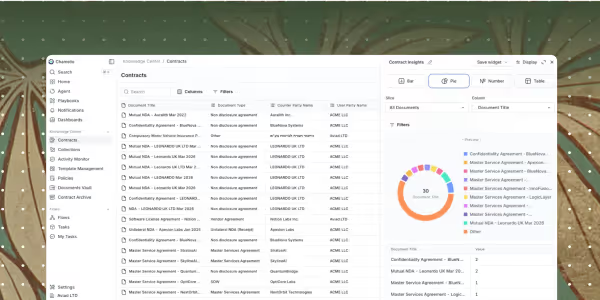
Consider a hospital network that missed the auto-renewal deadline on its EHR contract. It was locked into a rate roughly 40% above original terms, an unplanned cost of $350,000 over three years from a single missed notice window. This kind of outcome is not unusual; it is what happens when renewal tracking depends on whoever remembered to set a reminder. Contract renewal tracking software solves this by automatically extracting dates, pushing alerts to the right owners before notice periods close, and keeping obligations visible across the portfolio. Chamelio goes further: it does not wait to be asked. The Smart Repository extracts key dates and terms at ingestion, Reminders and Automations route alerts to the right stakeholders, and the Insights dashboards keep your team's obligation exposure visible at all times.
What should you look for in a contract renewal and obligation tracking platform?
The wrong platform finds the renewal date. The right one tells the right person about it, at the right time, with enough lead time to act. For a General Counsel managing hundreds of contracts across multiple departments, the gap between those two outcomes is material. Choosing a platform means checking whether it extracts dates automatically, calculates notice-period deadlines correctly, routes alerts to actual owners, and surfaces obligation status in one view. Chamelio addresses the full list.
Key features General Counsel need for automatic renewal and obligation tracking
- Automated metadata extraction of renewal dates and notice periods. The platform should read your contracts and pull dates out for you. Chamelio's Smart Repository auto-extracts 15+ data points per contract, including Effective Date, End Date, Auto Renewal, and Notice Period for Renewal or Termination, without any manual tagging.
- Notice-aware alerts calculated backward from the notice deadline. An alert that fires on the contract end date is already too late. Look for a platform that calculates the notice period first, then counts backward so your team has time to act before the opt-out window closes.
- Configurable lead times and reminder cadences. Your SaaS renewals and your enterprise vendor agreements have very different timelines. The platform should let you set different lead times per contract type and send reminders at intervals that match how your team actually works.
- Dashboards showing renewal pipeline by risk level and department. General Counsel need a single view of what is coming up, which contracts carry the most risk, and which departments own the decision. Chamelio's Insights module provides dashboards for workload, efficiency, and obligation status across the full pipeline.
- Routing to specific account owners via Slack, email, or Teams. An alert in a system no one checks is not an alert. The platform should push reminders to the person accountable for the renewal through the channel they already use. Chamelio routes directly to Slack and Microsoft Teams.
- Full-text search and custom views across executed contracts. When a renewal comes up, your team should be able to find the original terms instantly. Chamelio's Smart Repository provides full-text search, filter by extracted data fields, and saved custom views so the answer is never more than a few clicks away.
- Agentic triggers beyond calendar-based reminders. Calendar reminders miss context. Look for a platform that can trigger actions based on contract activity, Slack messages, or scheduled conditions, not just a date on a grid.
Most platforms check one or two of these boxes. Legacy CLMs store dates and, at best, fire a basic calendar reminder. Other AI-native platforms add smarter extraction but stop short of obligation tracking. Chamelio's product comparison shows "Automated reminders & obligation tracking" checked for Chamelio and absent for both legacy CLMs and other AI-native platforms. That gap is where renewals get missed: dates extracted but no action taken, obligations surfaced but never assigned. Chamelio's Smart Repository, Insights dashboards, and Agentic Workflows connect extraction to routing to action in one system.
How do in-house legal teams track contract renewals and obligations using these platforms?
General Counsel and in-house legal teams face a familiar situation: contracts are signed, filed, and then forgotten until a renewal window quietly closes or an obligation goes unmet. Chamelio is built for exactly this gap. Rather than asking your team to chase dates manually or build calendar reminders by hand, Chamelio connects the entire lifecycle, from the moment a contract lands to the deadline that needs an owner. Here is how in-house teams put it to work.
- Upload contracts and let Smart Repository do the extraction. Chamelio's Smart Repository automatically extracts over 15 key data points, including Auto Renewal and Notice Period fields, the moment a contract is uploaded. No manual tagging required.
- Set up AI Agents to watch collections for upcoming obligations. The AI Agent in Agent Hub can be configured to monitor a contract collection on a schedule or triggered from Slack, surfacing obligations before they become problems.
- Build Agentic Workflows that route renewal decisions to the right people. Chamelio's Agentic Workflows (Flows) support Notify, Approval, and Condition step types, so renewal decisions reach the right stakeholder automatically rather than waiting in someone's inbox.
- Turn on 'Enable reminders' in the Approval step. The Approval step includes a built-in toggle that automatically chases approvers who have not responded, so deadlines move forward without manual follow-up.
- Monitor the renewal pipeline in Insights. Chamelio's Insights module gives General Counsel dashboards covering obligation status and renewal timelines across departments, so nothing hides in a spreadsheet.
- Receive deadline alerts in Slack or Microsoft Teams. Native integrations with Slack and Microsoft Teams push renewal alerts directly to the people who need to act, in the channels they already use.
"Chamelio's platform has been a game changer for our team. Its powerful agents provide significant value, and the ability to upload agreements and instantly extract key information and analyze contract data without manual work is extremely helpful." — Maayan Yaakobovich, Senior Legal Counsel at Radware
What separates Chamelio from point-solution renewal trackers is the connection across the full lifecycle. Intake, negotiation, approvals, reminders, and executed contracts all live in one system. Your team is not stitching together a calendar plug-in, a separate repository, and a Slack bot. The obligation extracted at signature is the same obligation that triggers the Agentic Workflow, routes the approval, and alerts the owner. That is what a system of action looks like: it acts whether or not anyone opened it this morning.
Competitor comparison: tools to track contract renewals and obligations automatically
The table below maps all nine platforms across the dimensions that matter most when evaluating contract renewal and obligation tracking: whether automated renewal alerts are built in, how obligation tracking is handled, the depth of AI extraction, availability of Slack and Teams integrations, published pricing ranges, and how long deployment realistically takes. Use it as a starting point, then dig into the individual entries that follow for the full picture.
Across the nine platforms, Chamelio is the only one where automated reminders and full obligation tracking are confirmed present as named capabilities, and where both legacy CLMs and other AI-native platforms fall short on that same comparison. Every other platform on this list carries either enterprise pricing that starts well above $30,000 per year, a multi-month implementation timeline, or both. Chamelio's CLM Migrator gets in-house teams live in days. For a detailed look at how Chamelio and Ironclad compare on renewal and obligation tracking, see Chamelio vs Ironclad, or explore the full Chamelio platform to see how obligations get surfaced before they become problems.
9 best tools to track contract renewals and obligations automatically in 2026
Chamelio
Most platforms store your renewal dates. Chamelio acts on them. The Smart Repository auto-extracts over 15 fields from every contract, including Auto Renewal, Notice Period, and Effective and End Dates, the moment a document lands in the system. From there, the AI Agent can watch collections for upcoming obligations on a scheduled trigger, push alerts to Slack or Teams, and route approvals through Agentic Workflows, with automatic reminders for anyone who has not responded. Obligations tracked, surfaced, and escalated before the date arrives. That is the whole point.
Key Features
- Smart Repository with auto-extracted renewal fields: Chamelio auto-tags 15+ metadata fields including Auto Renewal and Notice Period for Renewal or Termination. Full-text search, custom views, and filter by any extracted field mean your team can build a live renewal pipeline without a spreadsheet in sight.
- AI Agent with scheduled and activity-based triggers: Set up agents in the Agent Hub to watch specific contract collections on a recurring schedule, trigger from Slack, or fire on contract activity. Agents surface upcoming obligations and push them to the right owners without waiting to be asked.
- Agentic Workflows with Notify, Approval, and reminder steps: Build end-to-end renewal workflows using Notify steps, Approval steps with automatic reminders for non-responders, and Agent steps for AI analysis. Twelve step types, all combinable, all in one system.
Use Case Offerings
- Automated renewal tracking and obligation alerts for in-house legal teams managing high contract volumes
- Obligation escalation workflows that route pending actions to the right owner with deadline reminders built in
- General Counsel dashboards via the Insights module, giving visibility into renewal pipelines, obligation status, and team workload at a glance
Pricing
Chamelio does not publish a public price list. Contact Chamelio for a custom quote based on your team's size and contract volume.
Pros
- Auto-extracts renewal and termination notice fields from day one, no manual tagging required
- Agent Hub triggers on schedule, Slack, or contract activity, pushing obligations to the right person automatically
- Full workflow layer: Notify, Approval with reminders, and Agent steps in a single connected system
- SOC 2 Type II compliant; enterprise-grade encryption; customer data is never used to train external models
- Integrates with Slack, Microsoft Teams, Salesforce, HubSpot, DocuSign, Adobe Sign, Google Drive, SharePoint, and more
- CLM Migrator moves your contract history across in days, not months, so you are not starting from zero
Cons
- Pricing is not self-serve; teams looking for a transparent published rate card will need to start with a conversation
Chamelio is the Legal Intelligence platform for in-house teams who want obligations tracked and acted on, not just filed. Customers like Maayan Yaakobovich, Senior Legal Counsel at Radware, describe it plainly: "The ability to upload agreements and instantly extract key information and analyze contract data without manual work is extremely helpful." Duncan McQueen, Assistant GC at Integrity, puts the impact at 90% reduction in legal review time. And Noa Weyl, General Counsel at Bizzabo, captures it best: "It's like adding an extra team member handling routine work like a junior associate while providing strategic insight like a seasoned attorney." To see how the Chamelio platform handles renewal and obligation tracking end to end, explore the full product.
Ironclad
Ironclad is a contract operations platform with a centralized repository that provides visibility into contract status, obligations, and renewal dates. In June 2026, Ironclad added a Renewal Agent feature that scans upcoming buy-side contract renewals through a Vendor Renewals view, produces Renewal Briefs summarizing key terms, and lets users launch renewal workflows directly from those briefs. The platform also includes auto-renewal alerts specifically designed to flag unfavorable auto-renewal terms before they trigger. Implementation typically runs three to six months, and pricing scales significantly at enterprise volume.
Key Features
- Renewal Agent (June 2026): Scans upcoming renewals, generates Renewal Briefs with key terms, and allows users to initiate renewal workflows directly from the brief
- Centralized contract repository: Provides a single view of contract status, obligations, renewal dates, and risk with built-in reporting
- Auto-renewal alerts: Flags contracts at risk of auto-renewing on unfavorable terms before the notice window closes
Use Case Offerings
- Buy-side vendor renewal management for procurement and legal teams
- Portfolio-wide obligation and risk visibility through centralized dashboards
- Renewal workflow initiation directly from AI-generated renewal summaries
Pricing
Ironclad is quote-only. Vendr data (354 tracked deals) shows a median annual cost of approximately $40,110; mid-market buyers commonly pay $50,000-$120,000 per year; enterprise deployments can exceed $200,000 annually. First-year totals including implementation can reach $80,000-$320,000.
Pros
- Renewal Agent with AI-generated Renewal Briefs is a recent and notable addition for vendor renewal management
- Established centralized repository with strong visibility into obligations and renewal dates
- Auto-renewal alerts address a high-stakes edge case for legal teams managing vendor contracts
Cons
- Implementation runs three to six months, which delays time-to-value for teams with urgent renewal exposure
- Enterprise pricing can be significant; mid-market buyers should model total first-year cost including implementation
- Renewal Agent was released June 2026; depth and coverage of the feature set is still maturing
Icertis
Icertis is an enterprise contract lifecycle management platform with broad post-execution capabilities. After a contract is signed, Icertis monitors obligations, milestones, and renewal dates across the full portfolio and sends automated alerts before expiry dates. The platform's extraction capabilities cover more than 1,200 metadata fields, including auto-renewal clauses and termination notice periods. Icertis targets large enterprise organizations; implementation typically runs six to twelve or more months, and total first-year cost commonly exceeds $500,000 for large deployments.
Key Features
- Post-execution obligation monitoring: Tracks milestones, renewal dates, and obligations across the entire contract portfolio with automated pre-expiry alerts
- 1,200+ metadata extraction fields: Captures auto-renewal clauses, termination notice periods, and a wide range of structured contract data
- Enterprise lifecycle coverage: Spans the full contract lifecycle from request and negotiation through post-signature compliance and renewal
Use Case Offerings
- Large enterprise obligation management across complex, multi-jurisdiction contract portfolios
- Automated expiry and renewal alerts integrated with enterprise workflows
- Post-execution compliance monitoring for regulated industries with high contract volumes
Pricing
Icertis pricing is enterprise custom-quoted. Annual subscriptions typically range from $150,000 to $500,000+ depending on contract volume, AI modules, integrations, and user count. Implementation takes six to twelve or more months.
Pros
- Deep post-execution obligation monitoring across a large portfolio
- Broad metadata extraction covering 1,200+ fields including renewal and termination data
- Strong fit for enterprises with complex, multi-party contract environments
Cons
- Implementation timeline of six to twelve or more months means meaningful delays before teams can act on renewal data
- Pricing is enterprise-only; total first-year cost can exceed $500,000 for large deployments
- Scale and complexity of the platform can require significant internal resources to configure and maintain
LinkSquares
LinkSquares is a contract analytics platform that uses AI to extract renewal dates, cancellation terms, and obligations from executed contracts. Users report the platform reliably extracts auto-renewal dates and sends email reminders, reducing manual contract review for renewal tracking. LinkSquares' analytics layer allows legal teams to build dashboards showing contract renewal risk by quarter, liability cap exposure by vendor category, and NDA expiry by counterparty, without developer involvement. The platform is sold in modules; teams should factor that into total cost planning.
Key Features
- AI extraction of renewal and cancellation terms: Automatically pulls auto-renewal dates, cancellation windows, and obligation fields from executed contracts
- Email reminders for upcoming renewals: Sends automated notifications before renewal dates based on extracted contract data
- Legal analytics dashboards: Builds renewal risk views by quarter, counterparty, and category without requiring engineering resources
Use Case Offerings
- Renewal risk analytics and portfolio-level obligation dashboards for legal and legal ops teams
- Auto-extraction of renewal and termination terms across a contract repository
- Deadline reminders routed by contract data to reduce manual tracking
Pricing
LinkSquares is quote-only and sold in modules. Vendr data (71 deals) shows a median of approximately $31,000 per year, with a deal range of $5,999-$79,318 per year and a per-user cost of $2,500-$3,500. Implementation typically takes about three months.
Pros
- AI extraction of renewal dates and cancellation terms is a well-reviewed core capability
- Analytics dashboards for renewal risk are available without developer support
- Median pricing is lower than many enterprise CLM alternatives
Cons
- Modules are sold separately; full renewal and obligation tracking capability may require purchasing multiple add-ons
- Three-month implementation timeline delays immediate access to renewal visibility
- Analytics depth is strongest for legal-focused use cases; workflow automation is less central to the product
Sirion
Sirion is an enterprise contract management platform with a focus on post-signature performance and obligation management. Its Obligation Agents actively track contractual obligations, monitor compliance status, and trigger performance escalations and alerts. An Extraction Agent captures more than 1,200 metadata fields including auto-renewal clauses and termination notice periods. Sirion has been recognized as a Gartner Magic Quadrant CLM Leader for four consecutive years. The platform's strongest fit is large procurement teams managing complex, obligation-heavy vendor portfolios.
Key Features
- Obligation Agents: Actively monitor contractual obligations, track compliance, and trigger escalations and alerts when performance deviates or deadlines approach
- 1,200+ field extraction including auto-renewal and termination notice: Captures a broad set of structured data to support renewal and obligation tracking at scale
- Post-signature performance management: Tracks SLA adherence and supplier performance alongside renewal and obligation milestones
Use Case Offerings
- Post-signature obligation tracking and compliance escalation for large procurement and sourcing teams
- Auto-renewal clause monitoring with automated alert triggers before notice windows close
- SRM and supplier performance management alongside contract obligation tracking
Pricing
Sirion pricing is custom-quoted enterprise-only. Published UK G-Cloud rate cards indicate $95-$128 per user per month for Contract Intelligence (100-user minimum), $162-$236 per user per month for Contract Management (100-user minimum), and $236-$338 per user per month for SRM with obligation tracking (30-user minimum). Typical annual cost ranges from $80,000 to $400,000+.
Pros
- Obligation Agents designed specifically to monitor and escalate on post-signature compliance
- 1,200+ metadata extraction fields, including renewal and termination notice data
- Recognized in Gartner Magic Quadrant for CLM for four consecutive years
Cons
- Enterprise-only pricing with significant minimum user thresholds; not suited for smaller in-house teams
- Strongest fit is large procurement use cases; legal ops teams may find scope broader than needed
- Implementation and configuration complexity reflects enterprise product depth
Agiloft
Agiloft is a configurable contract management platform. In December 2025, it launched an AI Obligation Management module that automatically extracts obligations, deadlines, and compliance requirements from executed contracts and creates trackable items with automated alerts. The platform is no-code configurable with more than 1,000 connectors, which gives IT and legal ops teams flexibility to build renewal and obligation workflows without custom development. Pricing starts around $6,000 per year, making it one of the more accessible options on this list in terms of entry cost.
Key Features
- AI Obligation Management module (December 2025): Extracts obligations, deadlines, and compliance requirements from executed contracts automatically and creates trackable, alert-enabled items
- No-code configuration with 1,000+ connectors: Allows teams to build renewal and obligation workflows without developer resources
- Tiered pricing structure: Three tiers (Essentials, Advanced, Premium) spanning a broad range of team sizes and contract volumes
Use Case Offerings
- Obligation extraction and automated alert creation for post-signature compliance tracking
- Configurable renewal workflows built without engineering involvement
- Mid-market teams looking for a configurable platform with a lower entry price than enterprise CLM alternatives
Pricing
Agiloft pricing starts around $6,000 per year for the Essentials tier. Vendr data shows a median of approximately $68,121 per year across all buyers. Three tiers: Essentials, Advanced, Premium.
Pros
- AI Obligation Management module adds automated extraction and alerts for post-execution tracking
- No-code configurability with 1,000+ connectors reduces implementation dependency on developers
- Lower entry price than most enterprise CLM alternatives on this list
Cons
- AI Obligation Management module was launched in December 2025; feature maturity is relatively recent
- Specific renewal-tracking UI features beyond the December 2025 module are not extensively documented in public sources at time of writing
- Configuration flexibility can require internal investment to build workflows that match the team's needs
DocuSign CLM
DocuSign CLM is a contract lifecycle management platform that includes Contract Obligations Management for automated tracking and management of contractual obligations, and a Contract Renewals and Amendments module for automated notifications and approvals around renewal events. The platform benefits from deep integration with DocuSign eSignature, making it a natural fit for organizations already running DocuSign for execution. Pricing starts around $36,000 per year and scales significantly at enterprise volume.
Key Features
- Contract Obligations Management: Automated tracking and management of contractual obligations across executed agreements
- Contract Renewals and Amendments: Automated notifications and approval workflows for renewal events and contract amendments
- DocuSign eSignature integration: Direct connection between renewal workflows and eSignature execution within the same ecosystem
Use Case Offerings
- Obligation tracking and automated renewal notifications for teams already in the DocuSign ecosystem
- Approval workflows for renewal and amendment events with integrated e-signature execution
- Enterprise contract lifecycle management for organizations standardizing on DocuSign across legal and procurement
Pricing
DocuSign CLM starts from approximately $36,000 per year for smaller deployments. Mid-market (25-100 users) typically runs $60,000-$200,000 annually. Enterprise (100+ users) runs $200,000-$500,000+ annually (Vendr data).
Pros
- Contract Obligations Management and Renewals and Amendments modules directly address renewal tracking needs
- Strong eSignature integration for teams already using DocuSign for contract execution
- Established platform with broad enterprise deployment history
Cons
- Enterprise pricing tiers put the full platform out of reach for smaller in-house teams
- Platform breadth and configuration complexity may require significant implementation investment
- Teams not already in the DocuSign ecosystem may see less incremental value from the eSignature integration
Leah (formerly ContractPodAi)
Leah, rebranded from ContractPodAi in January 2026, is a contract intelligence platform with obligation tracking and renewal alerts included on all plans. The platform offers a smart repository with cognitive search, allowing teams to locate contracts and surface renewal and obligation data without manual indexing. Renewal date tracking and automated alerts are available regardless of which plan a customer is on, which distinguishes Leah from platforms where these capabilities are tier-gated. Most customers are reported to be live within two weeks according to company data.
Key Features
- Obligation tracking and renewal alerts on all plans: Automated tracking of renewal dates and alerts included at every pricing tier, not reserved for higher-cost plans
- Smart repository with cognitive search: Finds contracts and surfaces key terms without requiring exact keyword matches
- Fast deployment: Company data indicates most customers are live within two weeks
Use Case Offerings
- Renewal alert management for in-house teams wanting obligation tracking without a tier upgrade
- Cognitive search across the contract repository to locate renewal terms and obligation data quickly
- Teams looking for shorter time-to-value compared to traditional enterprise CLM implementations
Pricing
Leah pricing starts at approximately $50,000 per year per published third-party sources. Pricing is custom enterprise-only with no public rate card. Note: Leah's post-rebrand product feature pages returned errors during research for this article; specific feature claims should be verified directly with the vendor at time of purchase.
Pros
- Obligation tracking and renewal alerts included on all plans, not gated behind premium tiers
- Cognitive search in the smart repository supports fast location of renewal and obligation data
- Two-week deployment timeline is faster than most legacy enterprise CLM rollouts
Cons
- Pricing starts at approximately $50,000 per year, which may be a threshold for smaller teams
- Post-rebrand from ContractPodAi in January 2026 means product documentation and feature pages are still stabilizing
- Custom enterprise pricing with no public rate card requires vendor engagement to compare costs
Evisort (Workday CLM)
Evisort is now sold as Workday Contract Lifecycle Management, powered by Evisort AI, with evisort.com redirecting to Workday. The platform includes obligation tracking, renewal alerting, and an Ask AI natural-language interface for querying contract data. Workday positions the product around outcomes including a claimed 21-day average deployment. The platform handles forward-looking renewal reminders, key term extraction, and lifecycle tracking reliably in typical deployments. OCR performance with poor-quality scanned legacy documents is a known limitation, which can require manual clean-up for organizations migrating older paper-based contracts.
Key Features
- Obligation tracking and renewal alerting: Monitors obligations and sends renewal alerts as part of the core contract lifecycle layer
- Ask AI natural-language interface: Allows users to query contract data in plain language to surface renewal dates, obligation status, and key terms
- Workday ecosystem integration: Advantaged for organizations already running Workday HR or Finance, with bundled pricing available at renewal for existing customers
Use Case Offerings
- Renewal reminder management and obligation tracking for organizations already on the Workday platform
- Natural-language contract queries for legal and legal ops teams who prefer conversational search over filtered dashboards
- Key term extraction and lifecycle tracking for forward-looking contract portfolios
Pricing
No public price list is available. Vendr estimates most buyers pay $30,000-$150,000 annually; mid-market deals typically run $60,000-$120,000; enterprise with advanced AI can exceed $200,000. Existing Workday customers receive materially lower bundled pricing at renewal.
Pros
- Obligation tracking and renewal alerting are core platform capabilities, not add-on modules
- Ask AI provides natural-language access to contract and obligation data
- Existing Workday customers benefit from ecosystem integration and bundled pricing
Cons
- OCR struggles with poor-quality scanned legacy documents, requiring manual clean-up for older contract archives
- Organizations without an existing Workday relationship lose the primary pricing and integration advantage
- No public pricing means cost comparison requires direct vendor engagement
Evaluation rubric for contract renewal and obligation tracking platforms
Vendors in this category describe overlapping capabilities in very different terms, which makes side-by-side evaluation harder than it should be. A structured rubric forces the comparison onto a consistent axis. The categories below map to the features a General Counsel actually relies on once the platform is live: extraction quality, alert intelligence, routing depth, connectivity, deployment speed, security posture, and pricing transparency. Use the weight column as a guide for where to concentrate your due diligence.
The top three categories, extraction accuracy, alert logic, and routing depth, account for 65% of the total weight. That reflects where missed renewals actually originate: a field that was never extracted, a reminder that fired on the wrong date, or an alert that landed in the wrong inbox. Score each platform on those three before moving down the list.
Why Chamelio is the best platform to track contract renewals and obligations automatically
Every other tool on this list stores dates or sends alerts as an add-on. Chamelio is built differently. It is a Legal Intelligence platform, and on its own product comparison table, automated reminders and obligation tracking are confirmed present in Chamelio and absent or limited in both legacy CLMs and other AI-native platforms. That matters because tracking a renewal date in isolation is not the same as having the system act on it. Chamelio connects intake, workflows, approvals, and deadline reminders in one layer, so the obligation is tracked from the moment the contract is executed and the right owner is notified before the window closes. If your team is sitting on a legacy CLM, the CLM Migrator moves you off it in days, not months. Security is SOC 2 Type II with enterprise-grade encryption, and your contract data is never used to train external models. Noa Weyl, General Counsel at Bizzabo, put it plainly: "It's like adding an extra team member handling routine work like a junior associate while providing strategic insight like a seasoned attorney." See how Chamelio handles your contracts at chamelio.ai or contact Chamelio to get started.
FAQs about tools to track contract renewals and obligations automatically
Why do General Counsel need automated contract renewal tracking software?
World Commerce & Contracting research found that poor contract management costs businesses an average of 9% of annual revenue, with missed renewals a major contributor. Sirion's 2026 analysis puts the average loss from missed renewals at $393,000 per organization per year. Nearly 50% of organizations fail to effectively track at least some of their contracts. For General Counsel, that means renewal dates buried in spreadsheets and calendar reminders are a material risk. Chamelio surfaces renewal dates and notice periods automatically, so your team acts before the window closes, not after.
What is contract renewal tracking software and how does it work?
A renewal notification platform automatically tracks contract deadlines and sends reminders before renewal, termination, or notice dates occur, ensuring the right people take action within contractual notice periods. Most platforms extract key date fields from executed contracts, calculate alert windows backward from the notice deadline, and route reminders to the relevant owner. Chamelio's Smart Repository handles this extraction automatically across your entire contract portfolio, pulling fields like End Date, Auto Renewal, and Notice Period for Renewal or Termination from every agreement the moment it enters the system.
What are the best tools to track contract renewals and obligations automatically in 2026?
The nine platforms worth evaluating in 2026 are: Chamelio, Ironclad, Icertis, LinkSquares, Sirion, Agiloft, DocuSign CLM, Leah (ContractPodAi), and Evisort (now part of Workday). Chamelio stands apart by connecting extraction, obligation tracking, and workflow routing in one platform, so renewal alerts do not stop at an email reminder but move through an actual workflow with owners, approvals, and escalation steps. Maayan Yaakobovich, Senior Legal Counsel at Radware, described it as "the ability to upload agreements and instantly extract key information and analyze contract data without manual work."
How does Chamelio track contract renewals and push obligations to the right teams?
The flow runs in four connected steps. Chamelio's Smart Repository extracts Auto Renewal, Notice Period, and End Date from every contract at ingestion. The AI Agent, configured in the Agent Hub, watches collections for upcoming obligations on a scheduled trigger. Agentic Workflows then route the obligation through a sequence: an Agent step for AI analysis, a Notify step that alerts the relevant team, and an Approval step with automatic reminders for anyone who has not responded. Chamelio integrates natively with Slack and Microsoft Teams, so those alerts land where your team already works.
What should General Counsel look for in a contract renewal management platform?
Five capabilities matter: automated metadata extraction that captures renewal dates and notice periods without manual entry; notice-aware alerts calculated backward from the actual notice deadline, not just the end date; configurable lead times so your team has enough runway to act; dashboards showing the full renewal pipeline by owner, value, and urgency; and routing logic that sends reminders to specific people via email or Slack rather than broadcasting to everyone. Chamelio's Smart Repository covers extraction and alerting; Agentic Workflows handle routing and approvals, all within one connected platform.
How does Chamelio differ from a CLM for obligation and renewal tracking?
Chamelio is a Legal Intelligence platform, not a CLM. The distinction matters practically: a CLM stores contracts and expects your team to go looking for what is due. Chamelio acts when something is due, pushing terms, dates, and obligations to the right owners through Agentic Workflows without waiting for someone to log in and check. Noa Weyl, General Counsel at Bizzabo, described it as "adding an extra team member handling routine work like a junior associate while providing strategic insight like a seasoned attorney." That is a system of action, not a system of record.
What is the cost of missing a contract renewal date?
Sirion's 2026 analysis puts the average cost of missed renewals at $393,000 per organization per year. A widely cited healthcare case study describes a hospital network locked into an EHR contract at rates roughly 40% above original terms, adding $350,000 in unplanned costs over three years from a single missed notice window. Missing a notice period can also prevent you from pursuing alternative vendors entirely. Chamelio tracks notice periods as a distinct extracted field, separate from end dates, so the alert fires when you still have time to act, not when the window has already closed.
How do automated renewal alerts work in contract management platforms?
The mechanical sequence is: extraction, field detection, scheduled trigger, notification. The platform reads the executed contract and extracts the End Date, Notice Period, and Auto Renewal flag. A scheduled agent calculates the alert date by subtracting the notice period from the end date. On that date, a Notify step fires an alert to the designated owner via email, Slack, or Microsoft Teams. In Chamelio, all twelve step types in Agentic Workflows are combinable, so the Notify step can be followed immediately by an Approval step with automatic reminders for anyone who has not responded within a set window.
Can contract renewal tracking software push reminders to Slack and Microsoft Teams?
Yes. Chamelio integrates natively with both Slack and Microsoft Teams, so obligation alerts and renewal reminders surface directly in the channels your team already monitors. The AI Agent in the Agent Hub supports Slack as a trigger source, and Agentic Workflows can push Notify steps to Slack or Teams as part of any automated renewal sequence. That means the General Counsel or contract owner receives the alert in context, without needing to log into a separate platform to act. No separate integration setup is required for these two channels.
What is the difference between contract obligation tracking and renewal management?
Renewal management is a point-in-time decision: does this contract auto-renew, do we want it to, and have we given proper notice? Obligation tracking is ongoing compliance: payment schedules, deliverable deadlines, reporting requirements, and other commitments that run throughout the contract term. Both require the same foundational infrastructure: extracted metadata, scheduled alerts, and routing to the right owner. Chamelio handles both. Smart Repository extracts the obligation fields; Agentic Workflows push them forward on the right schedule; the AI Agent monitors collections and flags anything that needs attention before it becomes a problem.
How long does it take to set up contract renewal tracking in Chamelio versus legacy CLMs?
Chamelio's CLM Migrator enables migration from a legacy platform in days, not months, which is a meaningful difference when the alternative is a 6 to 12 month enterprise rollout. Legacy CLMs typically require extended implementation projects before renewal tracking is operational. With Chamelio, Smart Repository begins extracting Auto Renewal and Notice Period fields from contracts as soon as they are uploaded, and Agentic Workflows can be configured to start routing obligations immediately after. For teams switching from a legacy system, the CLM Migrator moves contracts and extracted data off the old platform as part of the same process.
What contract metadata should be automatically extracted for effective renewal management?
Effective renewal management requires, at minimum: End Date, Effective Date, Auto Renewal flag, Notice Period for Renewal or Termination, Contract Value, and the contracting parties. Chamelio's Smart Repository automatically extracts more than 15 data points from every contract, including all of these fields plus Execution Date and custom columns your team defines. Full-text search and filter-by-field views make it straightforward to pull a renewal pipeline report across your entire portfolio. That extracted data also feeds directly into Agentic Workflows, so the system does not just surface what is due, it moves the obligation to the person responsible for acting on it.
Legal intelligence directly within your tools